
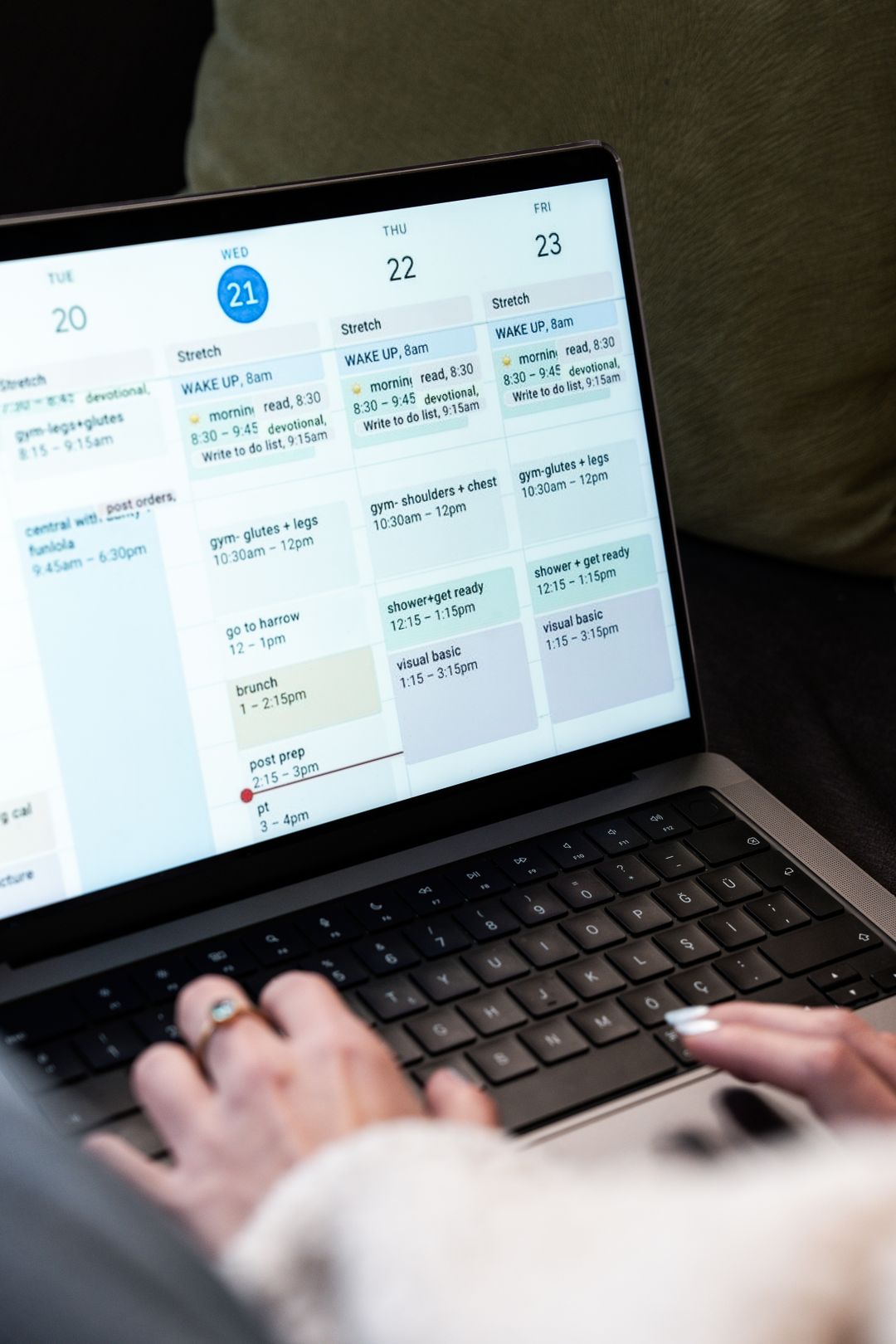
The auto-schedule button sits right there in the scheduling or payroll software you already pay for. Or a shift lead has started pasting everyone's availability into an AI assistant. Either way, a full draft shows up in seconds, the weekly totals look sensible, and you're tempted to post it.
Here's the catch in Nevada and California. Both states count overtime by the day as well as by the week, and they don't agree on when a day starts. Both also require breaks. A draft can look clean by the week and still be wrong by the day.
Below are the rules any tool has to carry, a worked example of where a count can slip, a checklist to test a tool against, and the parts that stay a manager's job. This is a buyer's guide, not legal advice. For how the rules apply to your staff, ask the Nevada Labor Commissioner, California's Labor Commissioner's Office or your employment lawyer.
By the week, and by the day: three overtime counts
A scheduling tool has to know which counts apply to each person. There are three to keep straight.
The federal baseline counts by the week. The U.S. Department of Labor's rules for the federal Fair Labor Standards Act say the law "provides 40 hours as the maximum number" an employee covered by it may work "in any workweek without receiving additional compensation," and that it "takes a single workweek as its standard and does not permit averaging of hours over 2 or more weeks." A tool that only watches weekly totals is watching this rule and nothing else.
Nevada adds a daily count, for some employees. Under Nevada Revised Statutes section 608.018, overtime is owed to an employee paid "at a rate less than 1 1/2 times the minimum rate set forth in NRS 608.250" who works "More than 40 hours in any scheduled week of work" or "More than 8 hours in any workday unless by mutual agreement the employee works a scheduled 10 hours per day for 4 calendar days within any scheduled week of work." So whether Nevada's daily rule applies depends on each person's pay rate. The dollar line moves with the minimum wage, and the Nevada Labor Commissioner publishes it in an annual daily overtime bulletin. Check the newest one there, not a number someone remembers.
California counts by the day, the week and the seventh day. The Labor Commissioner's Office overtime FAQ calls for time and a half for hours over eight in a workday and "for the first eight hours worked on the seventh consecutive day of work in a workweek." Double time applies to hours over 12 in a workday and to hours "in excess of eight on the seventh consecutive day of work in a workweek."
When does a workday start? Nevada and California disagree
A daily overtime count is only as good as the tool's idea of a day. This is the setting most worth checking, because the two states define it differently.
Nevada starts the clock when each person starts work. NRS 608.0126 defines a workday as "a period of 24 consecutive hours which begins when the employee begins work." That's per employee and per shift. It isn't midnight, and it isn't when your doors open.
California starts the clock at a fixed time the employer sets. The Labor Commissioner's glossary says: "A workday is a consecutive 24-hour period beginning at the same time each calendar day, but it may begin at any time of day." It adds that "an employer may establish different workdays for different shifts," and that "once a workday is established it may be changed only if the change is intended to be permanent".
A tool that counts by calendar date can miss Nevada hours that fall inside one employee's 24-hour workday. In California, a calendar-date count only matches if your business's workday actually starts at midnight. Either way, the tool has to be told.
A worked example: the late close and the early open
The shift times below are a made-up example, not a real employee or business, and the example counts hours only, not pay. To keep the arithmetic simple, treat each shift as eight hours of work. In real life an unpaid meal period would come out.
- Friday close: 4:00 p.m. to midnight.
- Saturday open: 10:00 a.m. to 6:00 p.m.
Counted the Nevada way. This employee's Friday workday begins at 4:00 p.m. Friday and runs 24 hours, to 4:00 p.m. Saturday. Saturday's shift starts at 10:00 a.m., so its first 6 hours, from 10:00 a.m. to 4:00 p.m., fall inside Friday's workday. That one 24-hour period holds 8 + 6 = 14 hours of scheduled work. The daily test in NRS 608.018 is "More than 8 hours in any workday". Saturday's shift also starts a 24-hour period of its own, so the two periods overlap. If this employee is below Nevada's pay line, ask the Nevada Labor Commissioner or your employment lawyer how overtime is counted for this pattern before you schedule it.
Counted the California way. It depends on the workday your business set. If it begins at midnight, Friday's workday holds the 8 hours from 4:00 p.m. to midnight, and Saturday's holds the 8 hours from 10:00 a.m. to 6:00 p.m. If it begins at noon, Friday's workday (noon Friday to noon Saturday) holds 8 + 2 = 10 hours, and Saturday's (noon Saturday to noon Sunday) holds 6. Same two shifts, different daily totals, depending only on when the business's fixed workday begins. Confirm with California's Labor Commissioner's Office or your employment lawyer how that applies to your staff.
The lesson isn't the answer for this one pattern. It's that a tool has to know whose workday it's counting and where that day begins, or the totals it shows you can be wrong in either state.
The breaks a schedule has to leave room for
A shift that runs wall to wall with no break placed in it isn't a finished schedule. Both states set meal and rest periods, and their rules differ.
Nevada
NRS 608.019 says: "An employer shall not employ an employee for a continuous period of 8 hours without permitting the employee to have a meal period of at least one-half hour."
For rest periods, Nevada's regulation, Nevada Administrative Code section 608.145, sets a schedule by continuous hours worked. It starts with "One 10-minute rest period if the employee works at least 3 1/2 continuous hours and less than 7 continuous hours" and steps up to two, three and four rest periods for longer shifts. The same section says "An employee may voluntarily agree to forego any rest period or meal period." It also says "The employer has the burden to prove the existence of any such agreement." So a tool shouldn't assume anyone has agreed.
California
The Labor Commissioner's meal period FAQ (revised July 2012) says "employees must be provided with no less than a thirty-minute meal period when the work period is more than five hours," and that the first one has to come no later than the end of the fifth hour of work. It can be waived by mutual consent only when the day's total work is no more than six hours. And: "A second meal period of not less than thirty minutes is required if an employee works more than ten hours per day".
The rest period FAQ says rest "must be at the minimum rate of a net ten consecutive minutes for each four hour work period, or major fraction thereof." The state's Division of Labor Standards Enforcement counts anything more than two hours as a major fraction of four. No rest period is required when total daily work time is under three and a half hours.
So a tool has to place breaks inside each shift under the right state's rules, not trim a lump off the day's total.
The checklist: what any scheduling tool has to know
Use this on any tool: the auto-scheduler in software you already pay for, a general AI assistant, or an agent built for your business. Ask the vendor, or better, feed it a made-up week like the example above and see what comes back.
- Which state each location is in. A business with a Henderson location and a Los Angeles location needs two sets of rules, not one company-wide overtime setting.
- Which Nevada employees fall below the daily overtime pay line. Under NRS 608.018 that depends on pay, so the tool needs current pay rates. If it's a general AI assistant, think before anyone pastes pay data into a personal account. We cover that choice in whether to ban staff AI accounts, allow them, or pay for work accounts.
- Nevada workdays counted from the start of each employee's shift. Not by calendar date. Test it with a late close and an early open, and see whether it puts those hours in the same 24-hour workday that NRS 608.0126 describes.
- The California workday your business actually set. Ask where that start time goes in the tool. If nobody knows when your California workday begins, settle that first. The glossary lets it begin "at any time of day," but it has to be the same time each day.
- Which Nevada employees have agreed to a scheduled four-day, ten-hour week. NRS 608.018 takes that schedule out of the daily count only "by mutual agreement." The tool should record who agreed, not assume it. California is different: its four-ten and other alternative workweek schedules follow separate wage-order rules that this guide doesn't explain. Before any tool treats a California four-ten as normal, ask the Labor Commissioner's Office or your employment lawyer.
- A seventh consecutive day. California's overtime rules change on "the seventh consecutive day of work in a workweek," according to the overtime FAQ. The tool should flag it before the schedule is posted, including when a shift swap creates one.
- Room for meal and rest periods. Breaks placed inside each shift at the point each state's rules call for, as covered above, not a lump taken off the total.
- Overtime shown before posting, not after payroll. The draft should mark which hours would cross each daily and weekly line, person by person, so a manager decides on overtime before the schedule goes up instead of finding it on the payroll report.
Red flags when you test a tool
- It only reports weekly totals per person.
- It has one overtime setting for every location.
- It can't tell you how it defines a workday, or its answer for Nevada staff is "the calendar day."
- It states rules you can't find on the agency's own page. That goes double for a general AI assistant answering from memory.
- It labels a schedule "compliant." A tool can count hours and flag patterns; pay rates, agreements and exemptions still need a person to confirm.
Exemptions: check which ones apply to you
Nevada, California and federal law all list exemptions, so not every employee is covered by every rule above. NRS 608.018 lists a number of them. Three examples: "Employees who are employed in bona fide executive, administrative or professional capacities"; "Employees covered by collective bargaining agreements which provide otherwise for overtime"; and "Employees of business enterprises having a gross sales volume of less than $250,000 per year".
California's overtime FAQ says "There are, however, a number of exemptions from the overtime law." The federal rules apply the weekly overtime count to an employee who "is covered by the Act and is not exempt from its overtime pay requirements."
Don't let a scheduling tool decide who is exempt. Check which exemptions apply to your staff with the Labor Commissioner or your employment lawyer, then tell the tool.
What stays a manager's job
A tool can draft and count. Three things still belong to a person.
- A named person approves the schedule before it's posted. Not "the system." One name, who reads the flags and owns the result.
- Overtime is decided on purpose. Sometimes it's the right call. What matters is that someone chose it from the draft's flags, not discovered it when payroll ran.
- Risky shift swaps come back to that person. A closer picking up the next morning's open, or someone covering a seventh consecutive day, creates exactly the patterns above. If swaps skip the tool's checks, the manager is the check.
Frequently asked questions
Does Nevada's daily overtime rule apply to all my hourly staff?
No. NRS 608.018 applies it to employees paid less than 1 1/2 times the minimum rate set in NRS 608.250, and the same section lists exemptions. The Nevada Labor Commissioner publishes the dollar line in its annual daily overtime bulletin, so check the newest one.
Is California's workday midnight to midnight?
Only if your business set it that way. The Labor Commissioner's glossary says a workday is a consecutive 24-hour period beginning at the same time each calendar day, but it may begin at any time of day, and an employer may set different workdays for different shifts.
Can California staff work four ten-hour days the way Nevada's exception allows?
Not under Nevada's rule. California's four-ten and other alternative workweek schedules follow separate wage-order rules, which this guide doesn't cover. Ask California's Labor Commissioner's Office or your employment lawyer before scheduling one.
Can an AI scheduling tool tell me my schedule is legal?
It can count hours and flag patterns, if it has been told the rules. Whether a schedule follows the law depends on pay rates, agreements and exemptions that a person has to confirm. Have a named manager approve it, and take unclear patterns to the Labor Commissioner or your lawyer.
The bottom line
An AI-drafted schedule is only as good as the rules it was given. In Nevada and California that means daily as well as weekly overtime, two different workday definitions, Nevada's pay line, California's seventh-day rule, and breaks inside each shift. Test any tool with a made-up week, keep a named manager on approval, and take unclear patterns to the Labor Commissioner or your lawyer before they show up in payroll.
If you're working out which parts of your operations to hand to AI and which should stay with a person, start a conversation with us.